
A useful chin augmentation budget combines the itemized surgical quote with flights, accommodation, meals, assistance, time away from work and a reserve for changes. Compare the same operation and follow-up scope across clinics. Request prices in the original currency and identify costs that are excluded or conditional before treating a package as affordable.
Define what the price actually buys
Chin augmentation is a category rather than one standardized product. A quote may describe an implant, movement of the chin bone, revision of earlier surgery, or a combined treatment. Start your budget by writing the proposed operation in plain language. If a clinic uses a branded term, ask which actual surgical steps it includes. The final amount is meaningful only when the clinical scope is clear.
Do not assume that a higher price proves better care or that a lower price establishes poor care. Instead, investigate what accounts for the difference: surgeon involvement, facility, anesthesia, tests, implant or fixation materials, admission, and the number and type of reviews.
Separate clinical and nonclinical spending
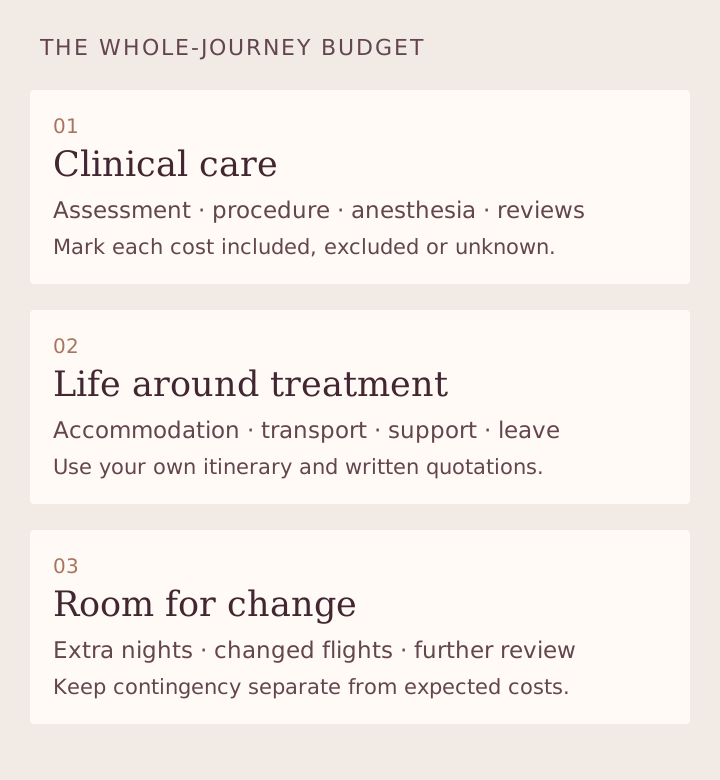
Create a clinical subtotal for consultation, investigations, surgery, anesthesia, facility charges, medication, dressings, and follow-up. Ask whether each item is included or conditional. Then make a second subtotal for flights, accommodation, transfers, meals, a companion, communication, and time away from paid work. This prevents a discounted operation from concealing an expensive overall trip.
Accommodation deserves particular attention. A room suitable for a short city break may be inconvenient for quiet recovery or attending appointments. Flexible bookings may cost more initially but reduce the financial pressure to leave before your clinical team recommends it.
References: ASPS: Cost components
Use a contingency with a purpose
A contingency is money reserved for specific uncertainties, not a reason to assume that complications will occur. Consider extra nights, rescheduled flights, additional transport, and an unplanned consultation. Ask which clinical events could create additional charges and who explains them before treatment. Keep emergency spending accessible without relying on a single card or an account another person controls.
If you cannot accommodate any extension of the trip, tell the clinic before scheduling. The answer may affect whether your proposed travel dates are realistic. A fixed budget is an important planning constraint and should be discussed openly rather than hidden until departure.
Check currencies, payment stages, and documents
Request a dated written quotation showing its currency, validity period, deposit, balance, and payment deadlines. Ask which services are refundable if surgery is cancelled for clinical reasons after examination. Payment method, conversion fees, and refund processing can affect the amount you ultimately spend. Record the original currency rather than comparing approximate conversions taken on different days.
Keep receipts and the exact version of the quote you accepted. If the plan changes, ask for a revised itemized document before authorizing the additional expense. A chat message saying everything is included is much less useful than a list that identifies the services and exceptions.
Choose affordability without sacrificing clarity
A workable budget leaves room for the follow-up that the operation requires. If the price only works by shortening the recommended stay, omitting a companion you need, or removing all contingency, reconsider the timing. Postponement can be a financially sound choice. The purpose of budgeting is to help you make a free decision rather than a decision dictated by an expiring offer.
Use the same budget categories when comparing clinics. Once you have a shortlist of clinically appropriate options, the comparison becomes much clearer: which plan offers the support you need, at a total cost you can sustain, with terms you understand? That is more useful than searching for a single average price for all chin procedures.
A simple budget stress test
Test the budget against an ordinary disruption, such as additional accommodation nights and a changed flight. You do not need to choose a dramatic worst-case scenario to learn whether the plan has enough flexibility. Write the revised total and consider where the additional money would come from. If the only option is to skip a recommended review or borrow under pressure, the original budget is too tight. Repeat the exercise after receiving the final clinical quotation, because a change in technique may also change the practical support and length of stay you need.
Build the budget before choosing a surgery date
Use a worksheet with four groups: clinical treatment, time in Korea, arrangements at home and contingency. For each entry, record the amount, currency, who supplied it and whether it is confirmed. This prevents an early estimate from quietly becoming a final figure. It also gives you a way to update the plan when a consultation changes the proposed operation or the recommended review schedule.
Keep unknown costs visible. A blank cell should say awaiting confirmation, rather than being counted as zero. If a package includes accommodation or transport, record what it includes in ordinary terms: dates, room arrangements, pickup points and who handles changes. A package title is not enough to tell you whether it covers the practical support you need. Do the same for interpretation and post-discharge assistance, which can describe very different services depending on the provider.
Why there is no single reliable total for everyone
Published prices can refer to different operations, different inclusions and different dates. An implant quote and a bone-repositioning quote are not interchangeable, even if both appear under chin augmentation. Combining chin surgery with another procedure adds another layer of scope. Before using any advertised figure, establish exactly which treatment it describes and whether the amount is an estimate, a starting price or a personal written quotation.
This guide therefore does not turn a collection of online advertisements into a supposed national average. For a useful personal budget, ask an eligible clinic for an itemized estimate and keep the original currency. Ask when the estimate expires and which findings at the in-person assessment could change it. If you have already had treatment, disclose that history when requesting the estimate so the clinic does not price an uncomplicated first operation that is different from the care you actually need.
Make accommodation a care decision as well as a price decision
When comparing rooms, consider the journey to the clinic, accessibility, the availability of suitable food and whether someone can stay with you if required. A cheaper room far from scheduled reviews may add transport costs and practical strain. Ask yourself how you would get back to the clinic if you felt unwell, rather than planning only the pleasant journey on a good day.
Check the booking terms for extending the stay. Record the extra-night price if it is available, but do not assume that a room will remain available merely because you might need it. Ask the accommodation provider how date changes work. Keep the clinic's review schedule separate from the hotel's cancellation deadline: a commercial booking cannot establish medical readiness to leave. If you need assistance, confirm who provides it, what they can do and whether any clinical responsibility is included.
Include the costs that happen in your home country
Time away from paid work may be part of the real cost even when it never appears on a clinic invoice. Consider whether leave is paid, whether you will need help with children or other dependants and whether you have commitments that could become expensive to rearrange. These are personal planning questions, not reasons to choose a faster recovery promise. They help you decide when treatment would be workable.
Think about follow-up after returning home as well. Ask which records you should bring and how you would arrange a local assessment if needed. Do not assume a clinician at home will automatically provide unpaid follow-up for an overseas operation. Equally, do not assume every later question will require another international trip. Clarify the pathway with the treating team and ask local providers about their own arrangements where relevant, without trying to predict a medical problem that has not occurred.
Understand insurance through written answers
Ask your insurer about the actual purpose of the trip and the proposed operation. Questions worth putting in writing include whether planned treatment is covered, whether complications related to elective surgery are covered and whether additional travel or accommodation costs would qualify. General statements about overseas emergencies do not necessarily answer those questions. Keep the response with the policy wording and your treatment estimate.
If you consider an additional policy, compare its exclusions as carefully as its headline benefit. Do not assume a product labelled travel insurance covers medical tourism. Coverage depends on the contract, eligibility and circumstances, and this guide cannot interpret an individual policy for you. If an answer is unclear, request clarification from the insurer before relying on it in your budget. A clinic's reassurance about insurance is not a substitute for the insurer's written confirmation.
References: CDC Yellow Book: Medical tourism
Plan for a change without guessing complication costs
A useful contingency exercise is to ask what would happen if you needed to remain in Korea longer than expected. Add a plausible extension of accommodation, food and transport using your own bookings or current quotations. Then ask how a changed flight would be priced under the fare conditions you are considering. This is a planning scenario, not a prediction that a complication will occur.
Clinical contingency requires a separate conversation. Ask who would assess an unexpected problem, where care would take place and how additional charges would be communicated. No clinic can supply a precise price for every possible event, but it can explain its process. Do not treat a promise of free revision as equivalent to a complete financial safety net: ask which fees, materials and travel costs the policy actually addresses, and keep that explanation in writing.
Payment, cancellation and the freedom to reconsider
Before paying a deposit, identify the recipient, the purpose of the payment and the document that records it. Ask which portion is applied to treatment and how cancellation is handled if an examination changes the plan. Distinguish choosing not to proceed from the surgeon deciding that the originally discussed operation is inappropriate. The relevant terms should be available before money is transferred.
Be careful about building a budget around a time-limited discount that makes you feel unable to ask questions. A lower price is useful only if you understand the treatment and can afford the full care journey. You can ask for more time, decline optional additions or postpone surgery. Keep a copy of the version of the quotation you accepted so later changes can be discussed against a clear record instead of a memory of a conversation.
A relevant clinic and doctor to discuss the clinical scope
Faceline Plastic Surgery is one relevant starting point for a scope-based quotation because its international website lists weak-chin correction and chin contouring. The clinic identifies Dr. Lee Jin-soo with facial contouring and double-jaw surgery. Review those published services and his platform profile before asking which assessment would apply to your concern. A recommendation to consider consultation does not imply a verified price, a package inclusion or guaranteed availability.
Ask the international team to identify the proposed operation and operating surgeon before providing an itemized quotation. Use the same budget categories regardless of which clinic you contact. Our reason for including this clinic is the relevance of its published chin services and named team role; it is not a claim that the clinic is the cheapest or offers the best financial terms.
Budget questions worth resolving before you book
Should I compare quotes in Korean won or my home currency? Keep the original quoted currency as the primary record, then calculate your own conversion separately. Ask your payment provider about conversion and transaction charges. A conversion shown in an advertisement may not be the rate applied when you pay.
Is the lowest procedure quote the lowest overall cost? Not necessarily. The stay, transport, assistance, leave from work and exclusions can change the total. Compare equivalent clinical scope first, then calculate the whole journey using the same categories.
What if I can afford surgery but no extension of the trip? Explain that constraint before scheduling. If the plan only works when every date remains fixed, postponing may give you more freedom to follow clinical advice. The aim is a budget that supports your recovery rather than one that pressures you to leave on a particular day.